GHK-Cu Peptide: The Complete Guide to Copper Tripeptide-1 for Skin, Hair & Anti-Ageing
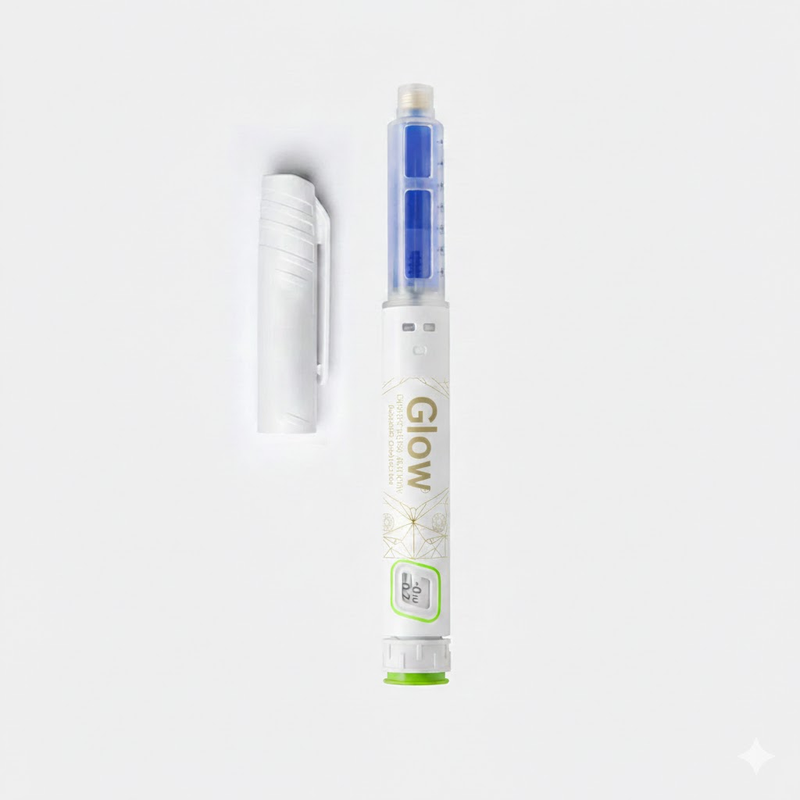
GHK-Cu — also known as Copper Tripeptide-1 or glycyl-L-histidyl-L-lysine copper — is one of the most extensively studied and clinically supported peptides in modern longevity and aesthetic science. First isolated from human plasma in the 1970s by Dr Loren Pickart, GHK-Cu has since accumulated decades of peer-reviewed research confirming its remarkable regenerative, anti-ageing and wound-healing properties.
In this complete guide, we cover everything you need to know: what GHK-Cu is, how it works, the science behind the benefits, how to use it, and where to buy pharmaceutical-grade GHK-Cu in the UK.
What is GHK-Cu (Copper Tripeptide-1)?
GHK-Cu is a naturally occurring tripeptide — a chain of three amino acids (glycine, histidine and lysine) bound to a copper ion (Cu²⁺). It is found naturally in human plasma, saliva and urine, and plays a crucial biological role in tissue repair, skin regeneration and immune regulation.
Plasma concentrations of GHK-Cu are highest in young adults (around 200 ng/mL at age 20) and decline significantly with age (dropping to around 80 ng/mL by age 60). This decline is closely correlated with the loss of skin firmness, reduced wound-healing capacity and increased systemic inflammation seen in ageing — which is why supplementation has attracted so much scientific and clinical interest.
How Does GHK-Cu Work?
GHK-Cu exerts its effects through multiple mechanisms:
- Fibroblast activation: GHK-Cu stimulates skin fibroblasts to produce collagen, elastin and glycosaminoglycans — the structural proteins responsible for skin firmness and elasticity.
- Antioxidant activity: The copper ion chelated in GHK-Cu scavenges free radicals and upregulates antioxidant enzymes including superoxide dismutase, protecting cells from oxidative stress.
- Gene expression modulation: Research by Dr Pickart and colleagues identified that GHK-Cu modulates over 4,000 human genes — resetting aged gene expression patterns towards a more youthful profile.
- Angiogenesis: GHK-Cu promotes the formation of new blood vessels, improving nutrient and oxygen delivery to skin and hair follicles.
- Anti-inflammatory signalling: GHK-Cu blocks the activation of NF-κB, a key driver of chronic inflammation associated with skin ageing and hair loss.
GHK-Cu for Skin: What the Research Shows
The skin benefits of GHK-Cu are among the most well-documented of any peptide. Clinical and in-vitro studies have demonstrated:
- Collagen synthesis: Multiple studies confirm GHK-Cu significantly increases collagen production in dermal fibroblasts. A 2000 study published in Journal of Biomaterials Science found topical GHK-Cu stimulated collagen synthesis by up to 70% compared to controls.
- Wrinkle reduction: Clinical trials using topical GHK-Cu formulations showed measurable reductions in fine lines, wrinkle depth and skin roughness after 12 weeks of use.
- Skin tightening: GHK-Cu increases elastin and fibronectin production, improving skin density and reducing sagging — particularly in the periorbital and lower face regions.
- Hyperpigmentation: GHK-Cu has been shown to reduce mottled hyperpigmentation and uneven skin tone by modulating melanin synthesis pathways.
- Wound healing: One of GHK-Cu's original documented roles is accelerating wound closure by attracting immune cells to the site of injury and stimulating extracellular matrix remodelling.
GHK-Cu for Hair Growth
Hair loss research has identified GHK-Cu as one of the most promising peptide-based interventions for androgenetic alopecia (pattern hair loss) and diffuse thinning.
- Follicle enlargement: GHK-Cu has been shown to enlarge miniaturised hair follicles, increasing the diameter of the hair shaft and reversing the follicle shrinkage associated with DHT-driven hair loss.
- Anagen phase extension: GHK-Cu stimulates follicles to enter and remain in the active growth (anagen) phase for longer, resulting in increased hair density over time.
- Scalp circulation: By promoting angiogenesis around hair follicles, GHK-Cu improves the delivery of nutrients and oxygen to the follicle bulb — a key factor in hair follicle health.
- Comparison to Minoxidil: A study published in Skin Pharmacology and Physiology found GHK-Cu to be comparable in efficacy to 5% Minoxidil for stimulating hair growth in certain models.
GHK-Cu and Anti-Ageing: Beyond the Skin
The systemic effects of GHK-Cu extend well beyond cosmetic applications. Research has identified roles in:
- DNA repair: GHK-Cu upregulates genes involved in DNA repair and replication fidelity, potentially reducing age-related genomic instability.
- Neuroprotection: Preliminary research suggests GHK-Cu may support neurite outgrowth and neuronal repair, with implications for cognitive ageing.
- Lung tissue repair: Studies have shown GHK-Cu improves the healing of damaged lung tissue, with researchers exploring applications in COPD and fibrosis.
- Systemic gene reset: Dr Pickart's landmark research showed GHK-Cu can reset expression of over 4,000 genes in aged tissue towards a more youthful pattern — a finding with profound implications for longevity science.
How to Use GHK-Cu Peptide
GHK-Cu is available in several forms for research and clinical applications:
- Topical solutions: Applied directly to the skin or scalp, typically at concentrations of 1–5%.
- Subcutaneous injection: Allows systemic delivery; used in research protocols studying systemic anti-ageing effects.
- Nasal spray: An increasingly popular delivery method for GHK-Cu due to rapid absorption through the nasal mucosa.
Dosing protocols vary depending on the application and research context. For skin-focused use, consistent daily or twice-daily topical application for a minimum of 8–12 weeks is typically required to observe significant results. As with all research peptides, consult with a qualified healthcare professional before use.
GHK-Cu Safety Profile
GHK-Cu has an excellent safety record across decades of research. It is naturally present in the human body, and topical formulations have been used in cosmetic products for many years without significant adverse effects. The main considerations are:
- Copper accumulation is not a concern at standard doses, as GHK-Cu is processed via normal copper metabolism pathways.
- Mild localised reactions (redness, tingling) have occasionally been reported with topical use, typically resolving within hours.
- As with all peptides, storage in cool, dark conditions and adherence to reconstitution guidelines is important to maintain potency.
Where to Buy GHK-Cu Peptide in the UK
Quality and purity are critical when sourcing GHK-Cu. Altheabio's GLOW 100mg is pharmaceutical-grade GHK-Cu (Copper Tripeptide-1) manufactured to the highest standards, with every batch independently third-party tested for purity, potency and heavy metal content — with Certificates of Analysis available to view on our lab reports page.
We offer fast UK dispatch, discreet packaging and a 30-day satisfaction guarantee on all peptide orders.
Key Takeaways
- GHK-Cu (Copper Tripeptide-1) is a naturally occurring human peptide with decades of peer-reviewed research supporting its benefits.
- It stimulates collagen and elastin synthesis, making it one of the most effective peptides for skin rejuvenation and anti-ageing.
- GHK-Cu has demonstrated hair follicle enlargement and anagen-phase extension comparable to topical Minoxidil in some studies.
- Systemic effects include DNA repair upregulation, neuroprotection and gene expression resetting towards a more youthful profile.
- It has an excellent safety record, being naturally present in human plasma and well-tolerated in research applications.
- For best results, source pharmaceutical-grade, third-party tested GHK-Cu from a reputable UK supplier like Altheabio.
Share this article

